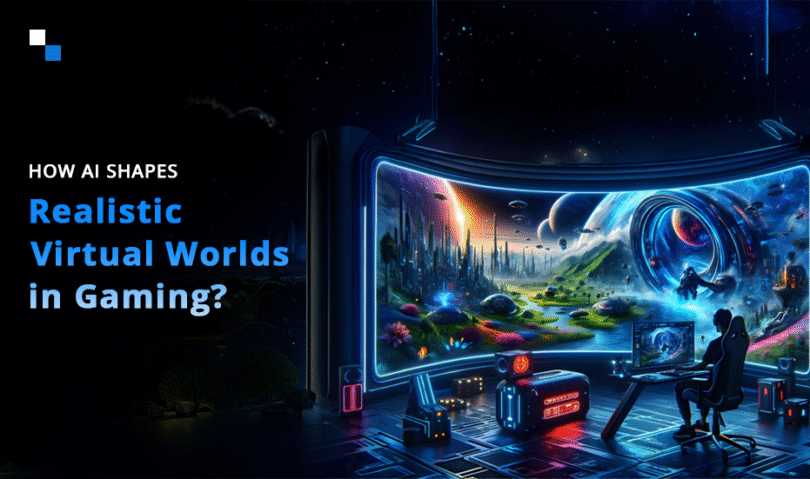

Imagine stepping into a game where every blade of grass sways differently in the wind, NPCs carry on conversations that feel startlingly human, and your actions ripple through the world in ways you didn’t anticipate. For years, this was the dream of both developers and players—a vision of game worlds so immersive and dynamic that they almost mirror real life. But the reality was always limited by technology. Developers had to handcraft every detail, script every conversation, and manually balance every interaction. It was time-consuming, expensive, and often left games feeling artificial once you scratched beneath the surface. Today, however, something is changing. Artificial Intelligence (AI) is no longer just a buzzword—it’s reshaping the entire gaming industry, making it possible for developers to create worlds that feel alive, unpredictable, and deeply engaging. And if you’ve ever wondered why modern games feel more dynamic than those from just a decade ago, the answer lies in the quiet revolution of AI.
The Evolution of Game Development Challenges
Game development has always been a race between imagination and limitations. Developers dream up massive, sprawling worlds filled with intelligent characters, complex ecosystems, and engaging narratives. But building such worlds is no easy task. Imagine having to design thousands of NPCs with unique behaviors, or coding branching storylines that don’t feel repetitive. For years, developers relied on traditional programming and scripted logic, which could only go so far. You could add more quests, more dialogue, or more AI routines, but eventually, everything began to feel mechanical. Players started noticing patterns, and once a system becomes predictable, immersion is lost. AI, however, has begun to break these barriers. With machine learning and procedural generation, developers are no longer handcrafting every single detail—they’re teaching systems to learn, adapt, and create.
AI-Powered NPCs: More Than Just Scripted Robots
One of the most noticeable areas where AI shines is in NPC (non-playable character) behavior. In older games, NPCs often felt lifeless: they stood in the same spots, repeated the same lines, and followed predictable routines. But today, AI allows developers to build NPCs that feel more human. Using natural language processing and decision-making models, NPCs can react dynamically to player actions. Imagine walking into a village after causing chaos in another town—NPCs might whisper about your deeds, avoid you, or even form groups to resist you. The depth this brings to storytelling is profound. Developers can now focus less on scripting every possible outcome and more on guiding AI systems that generate believable, unscripted interactions. This shift is revolutionizing genres like RPGs and open-world adventures, where immersion is everything.
Procedural Generation: Infinite Worlds, Infinite Stories
If you’ve ever played a game with massive maps, you know the painstaking effort that goes into world-building. Manually designing every mountain, river, and settlement isn’t just exhausting—it’s practically impossible at scale. This is where AI-driven procedural generation comes in. Games can now create vast landscapes on the fly, each with unique details, weather systems, and ecosystems. AI doesn’t just randomize terrain; it makes logical decisions. A desert won’t suddenly sprout a rainforest, and towns are placed in believable locations near resources. This not only saves developers time but also keeps players engaged by ensuring no two playthroughs feel exactly the same. It’s like having an infinite canvas where the game continuously surprises you.
Smarter Storytelling with AI
One of the hardest parts of game development is writing compelling narratives that respond to player choices. Traditionally, branching storylines were created by mapping out “decision trees”—a daunting task that quickly became unmanageable. AI is changing this by enabling adaptive storytelling. Instead of scripting every possible dialogue choice, developers can use AI systems that generate dialogue in real time, adapting to the player’s past decisions. This creates narratives that feel unique to each playthrough. Imagine a role-playing game where your past actions influence not just the ending, but every interaction along the way—subtle changes in tone, attitude, and consequence that build into a story that feels truly yours. It’s no longer about following a script; it’s about living inside a story that’s evolving alongside you.
AI in Realistic Physics and Animation
Another area where AI is creating breakthroughs is in animations and physics. In the past, animators had to painstakingly keyframe every movement or rely on motion capture, which was expensive and often limited. Today, AI can generate realistic animations in real time, blending different motion datasets to produce fluid, natural movements. For example, when a character runs uphill, stumbles, or reacts to an unexpected attack, AI can adjust the animation on the spot, making it feel natural rather than robotic. Physics simulations are also benefiting from AI, making everything from water flow to object collisions more lifelike. This level of realism makes players feel truly embedded in the world, not just controlling a character in a static environment.
Enhancing Multiplayer Dynamics
Multiplayer games thrive on unpredictability, but balancing fairness and fun is a nightmare for developers. AI is stepping in here too, analyzing player behavior to adjust difficulty, matchmaking, and even in-game economies. For example, in competitive environments, AI can detect cheating patterns faster than human moderators, ensuring fair play. In cooperative games, AI-driven enemy behavior adapts to the skill levels of the group, keeping the experience challenging without being frustrating. Even casual genres, like a slot game or a pkv games, are being enhanced with AI-powered systems that personalize player experiences while maintaining fairness. This ensures that the excitement and tension remain intact across different gaming sessions.
Personalization Through AI
Players no longer want a “one-size-fits-all” experience. Some prefer high-octane challenges, while others enjoy slow exploration. AI makes it possible to personalize difficulty, world events, and even story progression based on a player’s style. For instance, if you’re someone who likes to explore every corner of the map, the game might reward you with additional lore or hidden quests. If you’re more of a speedrunner, AI might streamline the experience without breaking immersion. This level of personalization keeps players coming back because the game feels tailored to them. It’s not just about playing a game anymore—it’s about living inside an evolving, personalized adventure.
AI in Gaming Beyond Entertainment
Interestingly, the role of AI in gaming goes beyond just making things look pretty or feel immersive. Developers are also using AI for testing and debugging. Automated systems can play through levels thousands of times, identifying glitches, exploits, and balance issues that human testers would take months to uncover. This reduces development time and allows for more polished releases. AI is also helping indie developers—who don’t have the massive teams of AAA studios—compete by giving them tools to create detailed worlds without requiring armies of designers and programmers. In a way, AI is democratizing game development, leveling the playing field for small studios and solo developers.
The Future of Realism in Games
Looking ahead, AI’s role in gaming is only going to expand. Imagine games where ecosystems evolve realistically over time, where NPCs remember your past actions across hundreds of hours, or where multiplayer worlds feel alive with emergent behavior. The line between scripted content and player-driven stories will blur, creating experiences that feel endlessly fresh. Even casino-inspired experiences like a qqemas game or a poker game are being transformed by AI, which tailors odds, pacing, and presentation to keep players entertained without becoming repetitive. For developers, this means less time spent on repetitive coding and more time spent innovating on creativity and design. For players, it means stepping into worlds that are more than just games—they’re living, breathing universes.
Final Thoughts
AI is no longer just a background tool in gaming; it’s the invisible architect shaping how developers design, test, and release games. From smarter NPCs and adaptive storytelling to procedural generation and personalized gameplay, the impact is undeniable. The worlds we’re stepping into today are richer, more dynamic, and more unpredictable than ever before—and this is just the beginning. Developers now have the tools to turn imagination into reality faster and more effectively, while players get to enjoy experiences that feel truly alive. Whether you’re exploring a vast RPG world, diving into a multiplayer match, or spinning through a slot game, the invisible hand of AI is guiding the experience. The next time you find yourself lost in a digital universe, take a moment to appreciate how much of that immersion is being powered not just by human creativity, but by the incredible capabilities of AI.