
Business Model Canvas is a powerful tool that helps you see exactly how a business works all on one simple page. Instead of long business plans, it shows the key parts that make a business succeed: who your customers are, what you offer them, how you reach them, and how you earn money. Whether you’re starting a new idea or fixing an old one, this canvas makes thinking easy, visual, and clear. It’s used by students, small shop owners, and even big companies to plan smarter and grow faster with fewer mistakes and more focus on what truly matters.
The 9 Building Blocks Of Business Model Canvas
Business Model Canvas breaks a business into 9 simple building blocks that show how everything connects behind the scenes. These blocks help you understand your customers, the value you offer, the ways you reach people, and how your business earns and spends money.
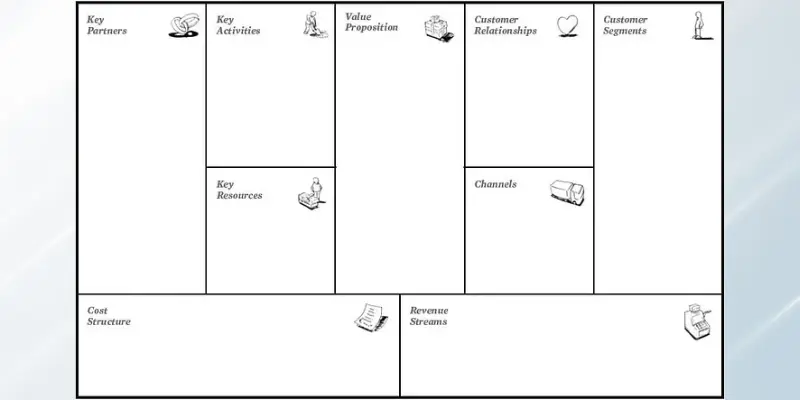
Each block answers one big question about your business like who you serve, what makes you different, and what you need to keep things running smoothly. By filling in each part, anyone from students to entrepreneurs can build a complete picture of their idea, without confusion or guesswork.
Key Resources & Key Activities in Business Model Canvas
Business Model Canvas highlights two core areas that keep any business alive Key Resources and Key Activities. Understanding these two areas helps avoid waste, reduce confusion, and stay focused on results.
1. Key Resources
These are the most important things your business must have to function properly. Without them, delivering your product or service would not be possible.
- Physical assets: Tools, buildings, equipment, or vehicles.
- Human resources: Skilled team members, workers, or partners.
- Financial resources: Capital, credit, or funding needed to run or grow.
- Intellectual resources: Brand, patents, software, or unique designs.
Think of Key Resources as the “ingredients” behind your product or service. If any are missing, your business won’t run the way it should.
2. Key Activities
These are the core actions your business takes to deliver value, reach customers, and keep running.
- Production: Making products or creating services
- Problem-solving: Designing solutions for customer needs
- Platform/Network: Managing websites, apps, or systems
- Marketing & Sales: Reaching people and helping them buy
Creating Your Canvas In Business Model Canvas
Business Model Canvas gives you a clean space to organize your entire business idea in one view. Making your canvas is simple, visual, and helpful at any stage whether you’re just starting or improving something old.

1. Use a large paper or whiteboard
Make nine boxes or download a free template. Keep it big enough to write clearly.
2. Start with Customer Segments
Ask yourself: Who will use or buy what I offer? Write down different types of customers.
3. Write your Value Proposition
What makes your product or service useful or special? Keep it short and honest.
4. Map out Channels
How will your idea reach customers? Think online, in-store, face-to-face, or mobile apps.
5. Define Customer Relationships
How will you connect with your users? Friendly support, emails, personal contact?
6. List your Revenue Streams
Where will money come from? One-time sales, monthly fees, ads?
7. Add Key Resources
What tools, skills, or money do you need to run the business?
8. Include Key Activities
What must happen daily to make your idea real and useful?
9. Note Key Partners
Who can help you? Suppliers, friends, companies, delivery services?
10. Finish with Cost Structure
What are the main costs? Write things you’ll pay for regularly or only once.
Advantages and Disadvantages Of Business Model Canvas
Business Model Canvas has smart pros for quick planning but also some cons. Learn what makes it useful and where it may fall short.
| Pros Of Business Model Canvas |
| Clear visual layout: Shows your whole business in one simple chart no long documents needed. |
| Flexible and simple to update: Changes can be made in minutes without rewriting everything. |
| Fast decision-making: Helps you see what works and what doesn’t, so you can act quickly. |
| Easy to share and explain: Great for teams, teachers, or investors. Everyone understands the same picture. |
| Cons Of Business Model Canvas |
| Not ideal for complex businesses: Some companies may need more detailed planning tools. |
| May miss market risks: Doesn’t always include outside threats like competition or legal issues. |
| Lacks deep detail: It shows the big picture but not full financial plans or deep research. |
| Can oversimplify real problems: A neat chart may hide hard challenges behind simple words. |
Common FAQs about Business Model Canvas
Business Model Canvas often raises common questions, especially for those using it for the first time. Below are the most helpful answers that clear confusion and guide better use of the tool.
What is the main purpose of Business Model Canvas?
It helps you see how your business works on one page. You can map out your idea, understand your customers, and improve your business model without writing long documents.
Who should use Business Model Canvas?
It is useful for students, entrepreneurs, start ups, teachers, freelancers, and even large companies. Anyone planning a business or testing a new idea can benefit from it.
Can Business Model Canvas replace a business plan?
No, it cannot fully replace a business plan. It gives a big-picture view, but it doesn’t include detailed financial forecasts, deep research, or legal sections.
How is Business Model Canvas better than traditional planning?
It is faster, visual, and easier to understand. You can make changes quickly and share your ideas without complex documents or reports.
Is Business Model Canvas only for new businesses?
No, existing businesses use it too. It helps them find weak areas, improve systems, and update their strategies when the market changes.
Can I create a Business Model Canvas without any experience?
Yes. You don’t need to be an expert. Just answer each block honestly and simply. Anyone can use it with basic understanding.
How often should I update my Business Model Canvas?
Update it whenever your business change like new products, customers, or partnerships. It’s a living tool, not a one-time task.
What’s the biggest mistake people make with Business Model Canvas?
They skip thinking deeply. Writing in each box is easy but what matters is how clearly the parts connect and solve real problems.
Conclusion
Business Model Canvas offers a clear and smart way to build, test, and improve any business idea. It turns complex planning into a simple visual map that anyone can use. With just nine building blocks, it helps you focus on what truly matters. Whether you’re launching something new or upgrading what already exists, this tool brings structure, speed, and clarity to every business journey.